O. J. Berman
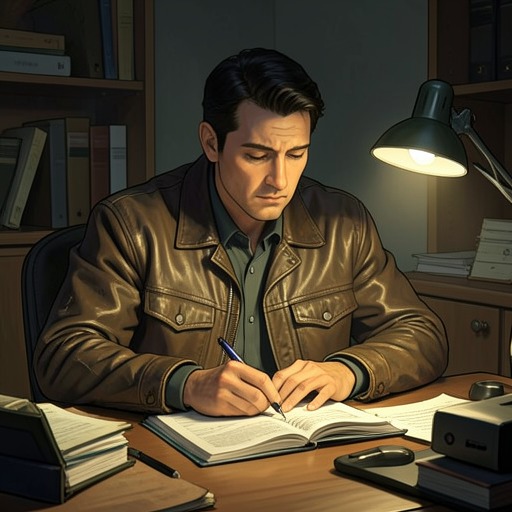
Breakfast at Tiffany'sO. J. Berman is a Hollywood actor’s agent whose career-long involvement with Holly Golightly combines professional advocacy, blunt criticism, and continued personal loyalty. He first spots her at Santa Anita Park when she is fifteen and tries to shape her into a screen performer; when she turns away from a promising test, he calls her a “real phony” but does not stop caring about her. Years later, after her arrest in the Sally Tomato case, he anonymously pays for a lawyer and bail. His role is defined by the tension between his clear-eyed doubts about Holly and his repeated willingness to help her.
Identity and First Encounter
Berman identifies himself as the person who discovered Holly, and the narrator learns that he is a Hollywood actor’s agent. His account begins at Santa Anita Park, where Holly was spending her days at the track. She was fifteen, living with a jockey, and, in Berman’s view, stylish and promising despite her thick glasses and conspicuous accent. He intervened with the jockey, warning him to end the relationship rather than risk attention from vice authorities because Holly was underage.
Berman says it took a year to smooth out Holly’s accent. The process included French lessons: once she could imitate French, she could imitate English. He and his associates modeled her on Margaret Sullavan, while leaving room for Holly’s own appeal. Berman recalls that people were interested in her and that Benny Polan, whom he describes as a respected man, wanted to marry her. These details show the methodical work behind the image of effortless glamour: Holly’s public manner was partly cultivated, though Berman believed she retained a distinctive quality that could not simply be manufactured.
Professional Ambition and Holly’s Refusal
Berman remembers Holly’s early Hollywood prospects as real but precarious. She had attracted professional attention, though she had not advanced beyond the still-photography department. Berman says he was the one pushing her career and believed a screen test for a nurse’s part in The Story of Dr. Wassell, directed by Cecil B. DeMille and starring Gary Cooper, could have opened a much larger opportunity.
Holly rejected that chance from New York. Berman recounts that he called her the day before the test and urged her to return to the Coast; she answered that she did not want the part, explaining that a performer had to want a role in order to do it well. When he asked what she did want, she said she would tell him when she found out. For Berman, this refusal is the decisive break in her prospects: he argues that walking away from an opportunity like that does not permit an easy return, and contrasts her path with that of established star Luise Rainer. His frustration does not erase his belief that Holly had potential; it makes her refusal seem to him both wasteful and characteristic.
His Judgment and Affection
Berman describes Holly as a “real phony”: not simply a conscious deceiver, but someone who believes the stories and ideas she lives by. He says that attempts to change her have failed, including efforts by Benny Polan, who wanted to marry her and spent money sending her to psychiatrists. Berman professes to like Holly and says that appreciating her requires sensitivity; he also sees in her a streak of the poet. At the same time, his predictions for her are bleak. He imagines self-destruction and insists that, in his judgment, her future was more promising a couple of years earlier, before she left Hollywood.
The contradiction is central to their relationship. Berman can describe Holly as irrational, dismiss her explanations, and forecast failure, yet he continues to treat her as someone worth helping. When the narrator points out that Berman has already said it is too late for her career, Berman answers that he could get it rolling again and says that he sincerely likes her. His judgment is harsh, but it is not indifference: the possibility of renewed help remains open even after he has declared her prospects nearly exhausted.
Later Help and Continuing Loyalty
Berman’s contact with Holly continues after his Hollywood effort has ended. While visiting her, he hears that Holly has shown him the narrator’s story in a magazine and that he thinks the narrator may be worth helping, although he objects to the subject matter and direction of the writing. His response places him again in the position of evaluator and potential sponsor, extending his professional outlook beyond Holly herself.
After Holly is arrested in connection with Sally Tomato, Berman is in California. The narrator’s attempt to reach him is delayed by busy telephone circuits; when they finally speak, Berman already knows about the case through Iggy Fitelstein, a New York lawyer. He has told the lawyer to take care of Holly, send him the bill, and keep his name anonymous. Berman says he does not technically owe her anything, but that he owes her something nonetheless. Although he repeats his judgment that she is crazy and a “real phony,” he has arranged for the lawyer to act and predicts that the ten-thousand-dollar bail will be handled that night.
Holly’s later explanation clarifies the limits of that assistance without diminishing it. She says Berman put up money for bail, but that she and Berman were square because she had once helped him win more than ten thousand dollars in a poker hand. Her understanding of the legal case is that the authorities want her as a state’s witness against Sally Tomato, not that they possess a strong case for prosecuting her. She refuses to testify against Sally, whom she regards as a friend, and prepares to leave on bail. Berman’s financial help therefore does not determine Holly’s choice: she accepts assistance, but rejects the course the authorities seek and decides that New York offers her no future.
Narrative Role
Berman’s recollections supply the clearest account of Holly’s early career and of the screen opportunity she chose to abandon. Because the story comes from an agent who both invested in her prospects and resented her refusal, it conveys professional disappointment alongside affection rather than a neutral appraisal. His later intervention repeats that pattern in practical form: he does not pretend to approve of Holly’s choices, yet uses his connections and money to help her when she is in legal danger.
His characterization also throws Holly’s independence into relief. Berman can discover her, coach her accent, shape her screen image, and arrange a lawyer, but he cannot make her want the film role or persuade her to testify. The agent’s influence reaches far; Holly’s decisions remain her own. O. J. Berman matters not as the force that directs her life, but as the witness to an unrealized career and a recurring, imperfect ally who keeps offering help without being able to control what she does with it.